
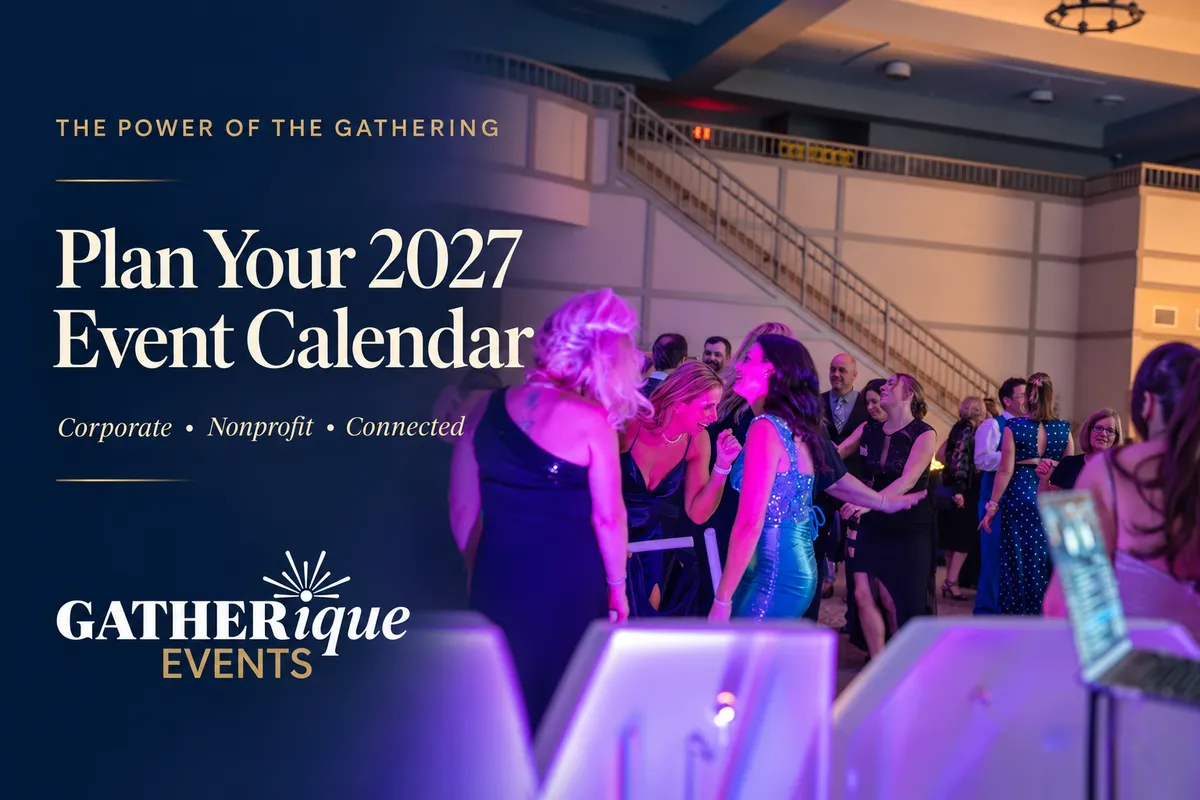
2027 Event Calendar: A Planning Guide for Organizations
THE QUICK ANSWER
How do you build an annual event calendar?
Start with the outcomes your organization needs, identify the people each gathering should serve, and map tentative dates against staff capacity and other commitments. Give every event an owner, a planning timeline, and a communication plan. Confirm those foundations before committing to venues, vendors, or technology.
A strong 2027 event calendar begins with a few thoughtful decisions in 2026. Which conversations need to happen? Who needs to be in the room? What should be different when everyone goes home?
For companies and nonprofits, an annual calendar can quickly become a collection of dates inherited from last year. The leadership retreat returns to its usual month. The fundraiser follows its familiar format. A client event gets squeezed between two internal deadlines. Each gathering may have value, yet the overall schedule can ask too much of the same team.
This guide helps you connect those separate events into a realistic plan. It brings corporate priorities, nonprofit relationships, and attendee communication into one discussion, including where a branded Event App can make information easier to find. Use it as a working session with your team, not a demand to organize every detail at once.
1. Give every gathering a clear purpose
List the events your organization is considering, including smaller gatherings that still require preparation. Beside each one, finish this sentence: “This event exists so that these people can accomplish this outcome.” If the sentence is difficult to complete, pause before choosing a venue.
A corporate sales kickoff might help managers agree on priorities and practice a new customer conversation. A nonprofit donor gathering might help supporters understand a program and connect with the people leading it. A conference might give members practical knowledge and useful professional relationships. Those purposes call for different agendas and different measures of success.
Next, separate what is essential from what is traditional. Keep a familiar element when it supports the purpose. Reconsider it when it consumes time without helping participants. Your calendar should make room for the conversations that matter, not simply preserve everything you did last year.
Gatherique's event strategy consulting can help an internal team clarify those decisions before planning becomes a series of disconnected bookings.
2. Plan around the people you want to reach
The same month can look very different to an executive team, a volunteer committee, and a group of traveling speakers. Before announcing dates, ask who needs to attend, what might prevent attendance, and how much notice those people need.
For corporate events, consider business cycles, sales meetings, training commitments, and the availability of essential decision-makers. For nonprofit events, consider donor and sponsor relationships, board responsibilities, volunteer capacity, and other community gatherings. A date that works for the venue may still be difficult for the audience.
New England planning also involves practical travel questions. Check local school calendars, holidays, major regional events, and seasonal conditions for the locations you are considering. Review actual dates and property availability rather than assuming a month is quiet or a venue is available.
Ask about access and participation needs early. A thoughtful calendar leaves time to arrange suitable spaces, communicate transportation details, and respond to requests. Those considerations belong in the initial plan, not in a last-minute message to registered guests.
3. Build a calendar that shows workload, not just event dates
A date on a calendar hides the work that makes it possible. Two events a month apart may require the same staff member to manage registrations, collect sponsor materials, and approve signs during the same week. Map the preparation as well as the event itself.
YOUR ANNUAL PLANNING CHECKLIST
What to include in your shared planning sheet
Purpose and audience: the outcome and the people the event serves.
Target date and alternatives: clearly marked as tentative or confirmed.
Internal owner: the person responsible for moving decisions forward.
Approval points: who approves scope, commitments, content, and changes.
Planning milestones: venue review, program development, invitations, and final details.
Communication needs: registration instructions, attendee information, and Event App content.
Follow-up: thank-yous, resources, sponsor reporting, and a review meeting.
Review the sheet by month and by owner. If one person has several major deadlines in the same period, move a milestone, simplify a program, or arrange additional support. This makes workload visible while there is still time to change it.
4. Balance corporate and nonprofit priorities
Your organization does not need every event format. Choose the mix that supports its actual goals. The following are planning examples, not a required schedule or a description of a past Gatherique client.
A CORPORATE PLANNING EXAMPLE
A growing company might use a leadership offsite to make decisions, a staff gathering to explain those decisions, and a client appreciation event to strengthen relationships. Planning them together helps the team give each event a distinct purpose. It also prevents the same presentation from becoming the default agenda for three different audiences.
If that sounds familiar, explore corporate event planning and leadership retreat planning. The right format should follow the work participants need to do together.
A NONPROFIT PLANNING EXAMPLE
A nonprofit might combine a donor appreciation gathering, a board retreat, and a fundraising event across its year. The calendar should allow time to communicate the mission, thank supporters, prepare volunteers, and fulfill sponsor commitments. Treating every gathering as another fundraising appeal can blur the purpose of stewardship.
With nonprofit event planning, the guest experience and the organization's mission need to support each other. Give each audience a clear reason to attend and a useful next step afterward.
5. Confirm the brief before choosing the venue
A beautiful room can be the wrong room for the program. Before comparing properties, document the expected audience, approximate attendance, preferred location, schedule, room arrangements, accessibility needs, and essential production requirements. Separate confirmed needs from preferences.
Think through the entire day. Where will guests arrive? Can registration happen without blocking circulation? Does a discussion require quiet space? Will speakers need a separate preparation area? Are meals, exhibits, sponsor displays, or breakout sessions part of the plan? A property tour becomes more useful when you bring these questions with you.
For traveling groups, consider accommodation needs alongside the meeting space. Confirm responsibilities and deadlines for any hotel arrangements before communicating them to attendees. Gatherique's venue sourcing support connects property research with the wider event plan.
Keep the complete scope visible when reviewing resources. Catering, production, staffing, transportation, registration, communications, and contingency arrangements all affect what the team can deliver. This article does not prescribe a price or a standard package. Your plan should reflect your actual event and approved resources.
6. Give Event Apps a role in the planning timeline
An Event App works best when it solves a defined information problem. A conference with multiple sessions may need clear agendas, speaker profiles, and room details. A nonprofit gathering may need sponsor recognition, mission resources, and timely announcements. A retreat may need schedules and practical arrival information in one place.
List the content before selecting features. Who supplies speaker biographies? Who approves sponsor descriptions? Who checks the agenda? Who handles changes on event day? Put those deadlines and owners in the same calendar as invitations and venue milestones.
Gatherique's branded Event Apps can be discussed as a standalone service or alongside event planning. Specific functions, integrations, attendee passes, notifications, and reporting should be confirmed for your event. Do not assume every app includes every feature or that every participant will use the same device.
Plan a simple introduction for attendees and an alternative way to get essential information. Test the experience from a guest's perspective, including finding a session, identifying the right room, and asking for help. For more detail, read 10 reasons to use an Event App.
7. Work backward from the decisions that cannot slip
An annual event calendar and an individual event planning timeline do different jobs. The calendar shows how gatherings fit together. The timeline shows when the work for one event must happen. You need both.
Start with the actual deadlines supplied by your venue, vendors, speakers, and internal approvers. Then work backward to allow time for gathering information, reviewing options, and making decisions. If final materials depend on an approved agenda, the agenda approval must happen before the production deadline.
As a starting point, larger or more complex programs may need many months of preparation, while a focused internal gathering may use a shorter schedule. There is no universal lead time. Cvent's event timeline guide also distinguishes between smaller events and larger conferences when discussing planning duration.
Use the following decision sequence, adapting the timing to your event:
Define: agree on purpose, audience, ownership, and the broad scope.
Confirm: assess dates, venue fit, essential partners, and approval requirements.
Develop: build the program and collect speaker, sponsor, and attendee information.
Prepare: test communications, brief the team, and confirm the run-of-show.
Follow through: deliver promised materials, thank contributors, and record improvements.
Your next team meeting: a practical calendar review
Bring your proposed event list, known deadlines, and the people who can make decisions. Start by identifying overlaps, unclear ownership, and gatherings with no defined purpose. Choose a small number of decisions to resolve during the meeting rather than attempting to design every event.
Leave with one shared calendar, a named owner for each event, and the next approval date. Record unanswered questions with a person responsible for finding the answer. A calendar becomes useful when the team knows what it must do next.
Frequently asked questions
When should we start planning our 2027 events?
Begin as soon as the purpose, audience, and likely timing can be discussed. In November or December, you can clarify the annual calendar even if every event detail is not settled. Prioritize early events and programs with complex travel, venue, speaker, or sponsor requirements.
Should we book a venue before hiring an event planner?
Bringing in planning support before booking allows venue choices to reflect the whole event. If a venue is already booked, share the agreement and confirmed arrangements so the remaining plan can be built around them. Be clear about which decisions are still open.
Does a smaller event need an Event App?
Not automatically. Consider the complexity of the information and the needs of the audience, not attendance alone. An app may help when schedules, resources, sponsor information, or announcements need a central home. A simpler gathering may need a simpler communication approach.
Can Gatherique help if our team is planning internally?
Yes. Gatherique offers strategy consulting and a Strategic Event Review & Roadmap for organizations that want planning direction. Discuss the decisions you need help with so the engagement fits your team's responsibilities.
Build a more intentional year of gatherings
Gatherique Events, led by Carol Connors in Manchester, New Hampshire, supports corporate and nonprofit events across New England and nationwide. The planning conversation can connect goals, logistics, vendors, and the participant experience before separate decisions become difficult to coordinate.
Book a consultation to discuss your 2027 event calendar. If your immediate priority is attendee communication, ask about a branded Event App and the information your guests need most.