
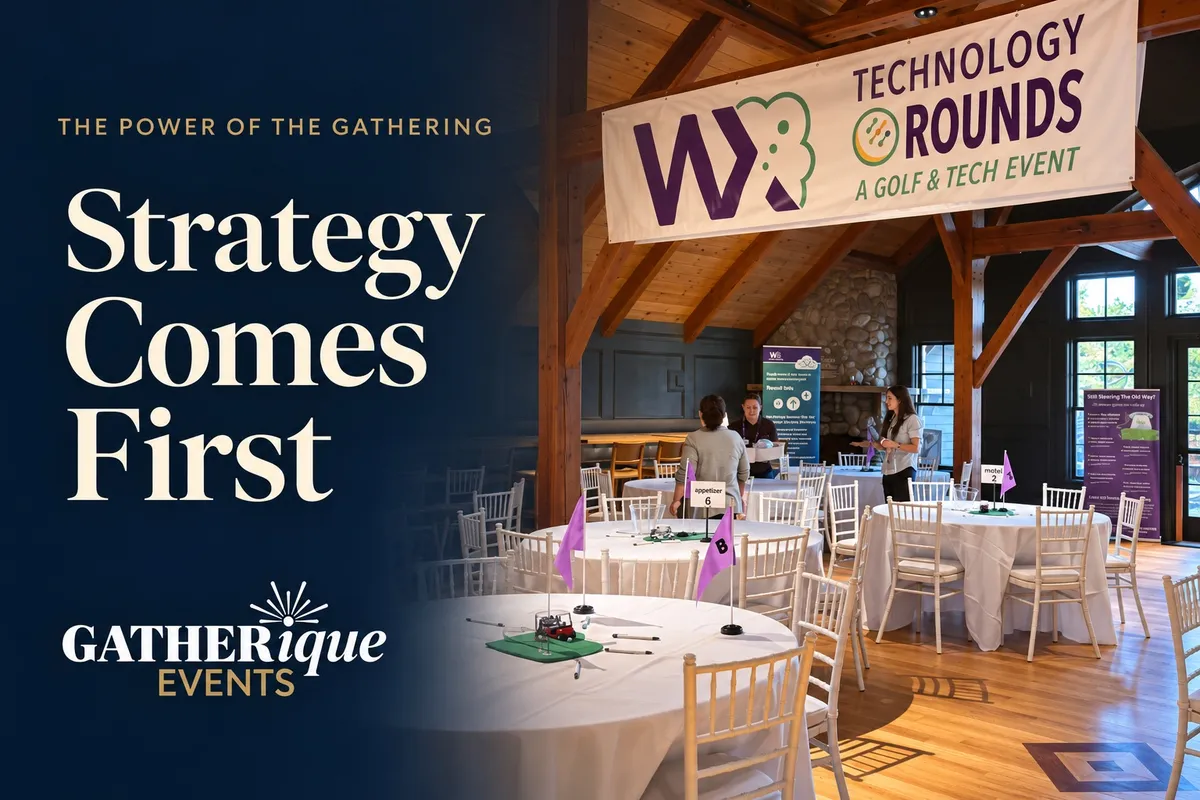
Why Strategy Is the Foundation of Every Successful Event
THE QUICK ANSWER
Why is strategy the foundation of a successful event?
Event strategy connects the reason for gathering with the audience, experience, budget, and measures of success. It gives the team a basis for choosing the format, prioritizing spending, and evaluating ideas. When strategy comes first, logistics can support a shared purpose and the organization can assess what the event actually accomplished.
Venue, catering, design, and production all matter. Their value becomes clearer when the organization knows what it wants the gathering to achieve.
I’m Carol Connors, founder of Gatherique Events in Manchester, New Hampshire. At Gatherique, our approach begins with a simple principle: Strategy First. Logistics Second. That means practical planning is guided by a clear understanding of the work the event needs to do.
For a conference, retreat, gala, fundraiser, or corporate gathering, the strategic conversation should begin before the team becomes committed to a format that may not fit.
Start with the organizational need
Ask what prompted the event. The answer might be a business priority, a relationship that needs attention, a learning need, a milestone, or a fundraising objective. Go beyond the fact that the gathering happens every year.
Describe the situation the organization wants to change. A team may need to agree on priorities. Customers may need a clearer understanding of a service. Donors may need to see how a program connects with the mission they support.
Decide what an event can reasonably contribute
A gathering can create focused time, shared information, conversation, and opportunities to act. It cannot automatically resolve every organizational challenge. Be clear about what should happen during the event and what requires continued work afterward.
Our event strategy consulting helps organizations examine those questions before the logistics become the main focus.
Choose a primary outcome and supporting goals
Events often have several goals, but they do not all carry the same weight. Identify the main result that would justify the gathering, then define the supporting outcomes that matter.
A conference might prioritize practical education while also supporting relationships and brand visibility. A leadership retreat might prioritize decisions while creating time for trust and connection. A nonprofit event might prioritize net fundraising proceeds while also strengthening stewardship.
Make the priorities useful for tradeoffs
When two ideas compete for time or budget, ask which better supports the primary outcome. If the event is meant to help participants solve a problem, a working session may deserve more time than another presentation.
This does not remove creativity. It gives creativity a direction. The visual design, program, and hospitality can reinforce the purpose rather than compete with it.
Understand the audience before designing the experience
Identify who needs to be present and why. Consider their existing knowledge, interests, responsibilities, and practical barriers to attending. A program built for the planning committee’s preferences may not meet the audience’s needs.
Separate different attendee groups when their needs differ. A first-time guest may need orientation and introductions. A returning participant may want deeper discussion. A sponsor may need clarity about its role and commitments.
Map the decisions guests will make
Guests first decide whether the event is worth their time. Then they decide how to participate, whom to meet, and what to do afterward. The invitation, registration, agenda, room setup, and follow-up should help those decisions.
Our guide to what attendees actually want explores how relevance, comfort, and connection influence that experience.
Translate the strategy into a practical brief
A strategy becomes useful when the team can apply it. Create a concise event brief that captures the purpose, audience, desired outcomes, constraints, and working assumptions.
Include the proposed format, approximate attendance, timing, location requirements, and budget parameters. Name the decision-maker and the people whose input is essential. Record unresolved questions so they can be investigated deliberately.
Include an experience statement
Describe the experience in plain language. For example, a retreat might need to feel focused, candid, and spacious enough for difficult decisions. A donor gathering might need to feel welcoming, informative, and closely connected to the mission.
Use that statement to evaluate choices. A crowded schedule may conflict with the need for reflection. A room with poor acoustics may undermine a discussion-based program. The brief should make such conflicts easier to see.
Use the budget to express priorities
A strategic budget connects spending with the work the event needs to accomplish. Identify which elements are essential to the purpose and which are optional enhancements.
For a conference, clear sound and useful content may be fundamental. For a retreat, privacy and facilitation may be central. For a fundraiser, the giving experience and mission presentation may need particular attention.
Make the effect of changes visible
If attendance, duration, or scope changes, review the complete effect rather than adjusting one line in isolation. A larger audience can affect space, equipment, staffing, catering, and registration support.
Our event budget planning guidance helps keep assumptions, estimates, and commitments clear. The budget should support informed decisions throughout the project.
Design the program around the intended outcome
The agenda should create the conditions for the desired result. If participants need to agree on actions, give them information, structured discussion, and time to make decisions. If the goal is education, build opportunities to apply the material.
A sequence of speakers is not automatically a strategy. Explain why each session exists and how it connects with what comes before and after it.
Review the whole guest journey
Consider arrival, registration, opening remarks, session flow, breaks, meals, networking, and departure. Each transition can either support the program or create friction that distracts from it.
For a working offsite, leadership retreat planning connects the agenda with the venue and team’s needs. For a larger audience, conference planning brings additional attention to production, movement, and participation.
Set measures before the event takes place
Decide what evidence would help the organization assess progress toward the objective. The measures should follow the purpose rather than default to whichever numbers are easiest to collect.
A retreat might track decisions made and actions completed afterward. A conference might examine participant feedback, learning outputs, and relevant follow-up. A fundraiser should distinguish revenue, expenses, net proceeds, and stewardship activity.
Keep the interpretation proportionate
A positive survey does not prove every business outcome. An increase in activity after the event may have several causes. Report what the evidence supports and explain what remains uncertain.
Our event ROI guide can help build a scorecard that reflects both the investment and the outcomes that matter to the organization.
Protect the strategy as the project develops
New ideas often appear during planning. Some improve the event, while others add complexity without a clear benefit. Use the brief to assess each proposal instead of deciding only on enthusiasm or visual appeal.
Ask what the idea contributes, what it requires, and what would need to change to include it. Consider the effect on guests, suppliers, timing, and budget before approving it.
Give stakeholders a clear review process
Set decision points and identify who approves significant changes. A shared process reduces conflicting instructions and allows the team to continue working from the same plan.
For an event already in progress, a strategic event review and roadmap can help identify gaps and prioritize the remaining work. Strategy can still improve a project after early decisions have been made.
See how strategy changes a planning decision
AN ILLUSTRATIVE PLANNING EXAMPLE
Imagine a company planning a leadership gathering after a period of organizational change. The first proposal includes a long presentation program and a large celebration. The strategic brief reveals that leaders mainly need to clarify responsibilities and agree on priorities. The team could shorten the presentations, add facilitated working sessions, and retain a thoughtful shared meal. The revised format follows the actual need.
This does not mean every event should become a workshop. A celebration may be exactly right when recognition and connection are the purpose. Strategy helps the organization choose deliberately and explain the reasoning behind the plan.
BEFORE LOGISTICS TAKE OVER
Your event strategy checklist
Describe the organizational need behind the gathering.
Choose a primary outcome and supporting goals.
Identify the audience and what participants need.
Create a brief with constraints, assumptions, and decision owners.
Connect budget priorities with the intended experience.
Give each program element a clear purpose.
Assign measures, data collection, and follow-up responsibilities.
Use the brief to assess significant changes.
Event strategy questions
What is the difference between event strategy and logistics?
Strategy defines why the event exists, whom it serves, and what it should accomplish. Logistics organize the practical work required to deliver it. They belong together because the purpose should guide the operational choices.
Does a small event need a strategy?
Yes, although the documentation can be simple. Even a short gathering benefits from a clear purpose, appropriate audience, useful agenda, and next step. The scale of the planning process should fit the event.
Can strategy change after planning begins?
Yes, when new information justifies a change. Review the implications for the audience, commitments, budget, and timeline, then communicate the approved direction clearly. Avoid allowing the purpose to drift through a series of unrelated additions.
Start your next event with clarity
Gatherique Events helps corporate and nonprofit organizations connect thoughtful strategy with organized execution. A clear foundation gives the planning team a shared direction and guests an experience built around a meaningful purpose.
Bring your goals or current event plan to a consultation with Gatherique Events. We can discuss the decisions that should come first and the support needed to carry them through.