
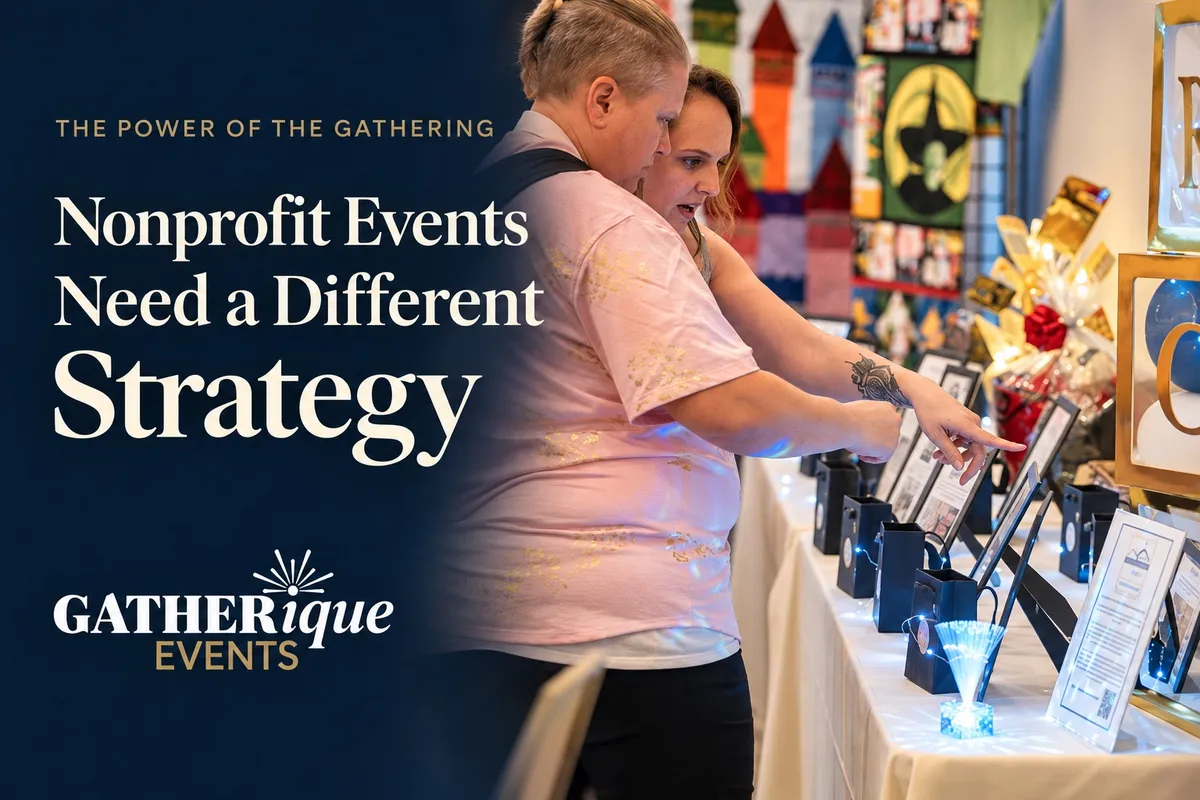
Why Nonprofit Events in New England Require a Different Strategy Than Corporate Events
THE QUICK ANSWER
Why does a nonprofit event need its own planning strategy?
A nonprofit event must reflect the mission, steward resources, respect the people represented, and support relationships with donors, sponsors, volunteers, and the community. Its purpose may be fundraising, education, appreciation, or governance. The strategy should match that purpose, with realistic financial assumptions, clear responsibilities, and follow-up that continues the connection.
A nonprofit gathering carries responsibilities beyond filling a room. It may help fund essential work, introduce the mission to new supporters, thank people who make programs possible, or give a board time to address important decisions.
Those responsibilities change the planning conversation. The team needs to consider how the experience reflects the organization’s values, how resources are used, and what guests are being invited to do.
At Gatherique Events in Manchester, New Hampshire, we bring structure and thoughtful coordination to that work. The most useful strategy begins with the specific nonprofit and its audience, rather than assuming every gala, conference, or donor reception should follow the same model.
Start by naming the event’s primary purpose
Not every nonprofit event is a fundraiser. A donor appreciation gathering may focus on listening and recognition. An association conference may support education and professional connection. A board retreat may need to produce decisions about direction and responsibilities.
Choose the primary purpose and explain how other goals support it. If the event is intended to raise funds, determine how much must remain after expenses and what assumptions support that target. If the purpose is appreciation, avoid turning the entire experience into an unexpected solicitation.
Design the invitation around that purpose
Guests should understand why they are being invited and what kind of experience to expect. Be clear about ticketing, program format, and any planned opportunity to give. A transparent invitation helps the organization build trust before guests arrive.
Our nonprofit event planning process connects the purpose to the format, program, and guest journey. That connection helps the team make decisions when time and resources are limited.
Plan for net results and organizational capacity
Fundraising targets need a realistic budget. Separate confirmed support from projected revenue, and distinguish gross income from what remains after costs. Ticket sales, sponsorships, donations, and auction proceeds may each have different assumptions and timing.
Include the expenses required to deliver the experience well. Depending on the event, that can mean venue, food, production, registration support, staffing, materials, and payment processing. Identify which costs vary with attendance and which remain fixed.
Include the workload in the decision
An event also uses staff and volunteer capacity. Consider the time required for sponsorship outreach, guest communication, auction coordination, program development, and follow-up. A format that looks inexpensive on paper may still demand more work than the organization can reasonably support.
Compare a few scenarios. What happens if attendance is lower than expected? Which commitments can still be adjusted? What is the minimum experience the team can deliver responsibly? These questions support better decisions before spending becomes difficult to change.
Use event budget planning to connect costs to the purpose. Protect the elements that support clear communication, comfortable participation, and reliable execution. Simplify extras that add complexity without helping the mission.
Build donor relationships into the experience
Donors and prospective supporters need more than a sequence of presentations. They need opportunities to understand the work, ask questions, and connect with the people responsible for it. The agenda should leave room for those conversations.
Plan hosting roles deliberately. Board members, development staff, and organizational leaders may each have relationships to support. Give them clear assignments and enough operational help that they can be present with guests.
Recognize different levels of familiarity
A longtime donor may know the organization well, while a guest attending with a friend may be hearing about it for the first time. Provide enough context for newcomers without making existing supporters sit through an overly long introduction.
Use clear language about the mission and its work. Avoid internal acronyms and assumptions about what everyone already understands. A welcoming explanation can help people see where their interest connects to the organization.
For events centered on recognition and stewardship, donor appreciation planning can create a different rhythm from a fundraising gala. The experience should match the relationship the organization wants to strengthen.
Use mission storytelling with care and accuracy
A mission story can help guests understand the human meaning of the work. It also creates a responsibility to the people whose experiences are shared. Plan the format, consent, preparation, and support with the organization and the participants involved.
Speakers should know the audience, how long they will speak, whether the event is recorded, and how their contribution may be used afterward. Give them a chance to ask questions and set boundaries. A meaningful story does not require someone to disclose more than they want to share.
Connect the story to verified impact
Use information the nonprofit can substantiate. Explain what support makes possible without exaggerating results or implying certainty where outcomes depend on several factors. Clear, accurate examples can be compelling without becoming sensational.
Prepare speakers for the practical experience as well. Confirm microphone use, introductions, stage access, and the person who will support them on the day. Respectful preparation helps participants feel more comfortable and helps the program flow.
Create a giving experience guests can understand
If the event includes a fundraising moment, make the invitation clear. Explain the purpose of the appeal, the ways guests can participate, and where they can find assistance. The process should be easy to follow for people with different levels of familiarity with fundraising events.
Coordinate the appeal with the rest of the program. Meal service, room movement, sound, and speaker transitions can affect attention. A focused moment needs the operational support to be heard and understood.
Test the process from the guest’s side
Walk through any digital giving or bidding tools before the event. Check instructions, confirmation messages, and how the team will respond to questions. Provide an appropriate alternative for someone who cannot or prefers not to use a phone.
Define who will reconcile commitments, respond to donor questions, and handle the organization’s required acknowledgment process. Event operations and development follow-up need a clear handoff. Our nonprofit fundraising event planning approach connects the guest experience to those practical responsibilities.
Offer sponsorship benefits the team can fulfill
A sponsorship package should explain the mission connection, audience, and specific benefits offered. Recognition might include signage, program placement, event communications, or an appropriate hosted experience. Each benefit should have a clear owner and delivery plan.
Balance sponsor visibility with the purpose of the gathering. Too many speaking slots can crowd out the mission. Too many visual elements can make the room feel cluttered. Thoughtful recognition can be prominent without overwhelming the guest experience.
Separate outreach from fulfillment
The person coordinating sponsor logos may not be the person responsible for securing the commitment. Clarify who develops the package, leads relationship conversations, approves benefits, collects materials, and prepares the post-event report.
Track what was promised and what was delivered. This makes appreciation more specific and helps the organization review future sponsorship conversations. Avoid treating projected sponsorship revenue as confirmed until the commitment is documented through the organization’s process.
Coordinate volunteers, vendors, and hosts as one team
Nonprofit events often bring together people with different levels of event experience. Volunteers may care deeply about the mission but need clear instructions about their role. Vendors need accurate schedules and access information. Hosts need to know where they should be and whom they are welcoming.
Provide role-specific briefings and a clear point of contact. Explain arrival time, responsibilities, common questions, and the process for escalating an issue. A short, useful briefing can prevent uncertainty during the busiest part of the event.
Make contingencies practical
Consider a late delivery, a missing volunteer, a speaker change, or a technology problem. Identify who responds and which parts of the program can adjust. The team should understand the priorities well enough to preserve the guest experience when the plan changes.
For a larger benefit evening, fundraising gala planning coordinates these details with registration, seating, service, and the program. Clear responsibilities help the nonprofit’s leaders focus on supporters.
PUT IT INTO PRACTICE
Imagine a community nonprofit choosing between a large gala and a smaller donor reception. The team compares the net fundraising potential, staff workload, guest relationships, and follow-up capacity. The better choice is the format that serves the purpose and can be delivered well, even if it is less elaborate.
Plan stewardship before the event ends
Thanking guests and contributors should be part of the original plan. Assign responsibility for donor follow-up, sponsor fulfillment, volunteer appreciation, and any promised resources. Capture the information needed to carry out those tasks accurately and respectfully.
Review financial outcomes alongside relationship and operational results. What remained after costs? Which conversations need follow-up? Were sponsor commitments fulfilled? What did the team learn about the format and workload? Use the findings to improve the next decision.
YOUR NONPROFIT STRATEGY CHECKLIST
Before committing to the format
Define the primary purpose and the audience it serves.
Build realistic revenue, cost, and workload assumptions.
Plan respectful storytelling and verified impact messages.
Clarify giving, sponsorship, and follow-up responsibilities.
Design a welcoming experience with practical participation options.
Brief volunteers, vendors, and organizational hosts.
Assign stewardship and evaluation before event day.
Frequently asked questions
Does every nonprofit event need a fundraising appeal?
No. The program should follow the purpose. An appreciation event, board retreat, or educational conference may have a different goal. Be clear with guests about the experience they are being invited to join.
How can a nonprofit avoid overspending?
Use a complete budget, distinguish confirmed revenue from projections, and compare realistic attendance scenarios. Prioritize the elements that support the mission and guest experience. Consider the staff and volunteer workload as part of the format decision.
When is outside planning support useful?
Support is useful when the event’s coordination, production, or strategy requires more capacity than the internal team can comfortably provide. Define the gaps and compare the responsibilities included in each proposal. The right scope should help the organization use its people effectively.
Give your mission a thoughtful event strategy
Nonprofit events deserve clear purpose, careful stewardship, and a guest experience that reflects the work behind them. Gatherique Events helps New England organizations bring those elements together. Let’s discuss the gathering your mission needs and the support that will help your team deliver it well.