
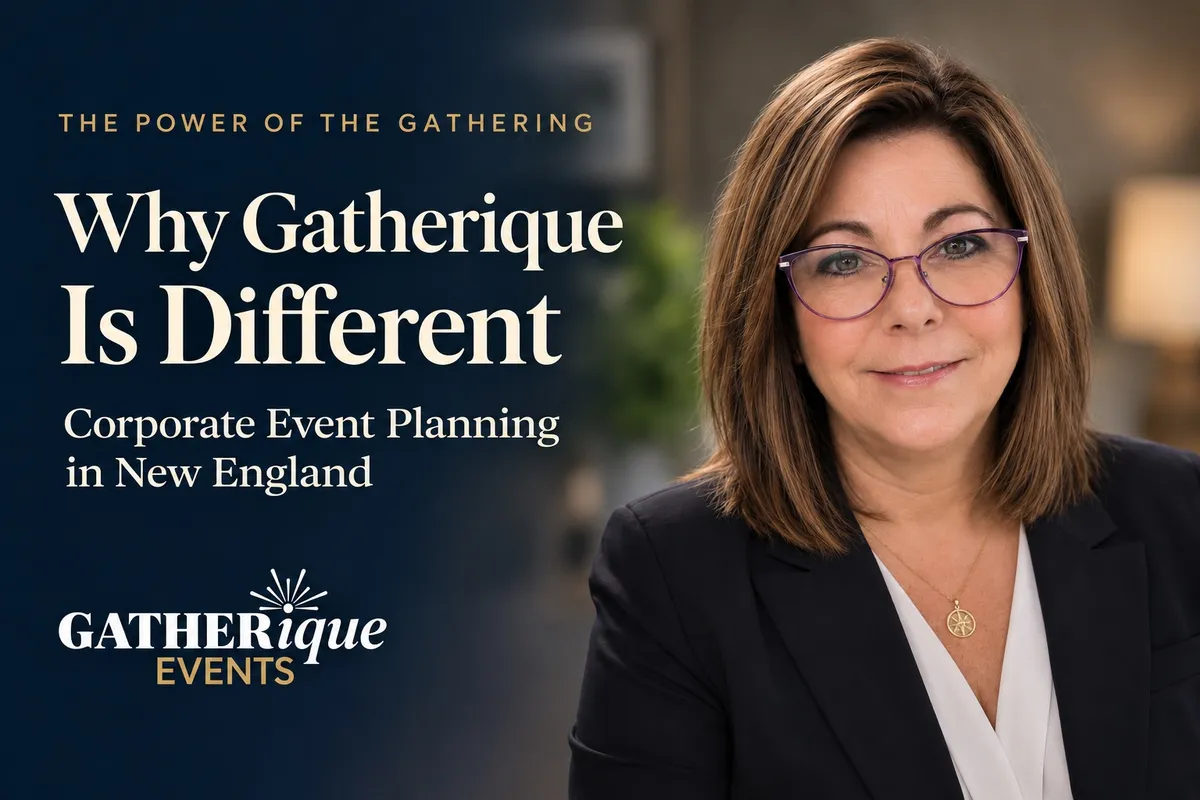
Why Hiring Gatherique Events Is Different Than Other Corporate Event Planners in New England
THE QUICK ANSWER
What should you know before hiring Gatherique Events?
Gatherique Events combines event strategy, creative design, and practical coordination for corporate and nonprofit gatherings. Based in Manchester, New Hampshire, Carol Connors begins with the purpose, audience, and outcomes behind the event. The planning scope is shaped around the support your team needs, with clear responsibilities and a guest experience that reflects your organization.
If you are comparing corporate event planners in New England, you are asking a sensible question: what will working with this person actually be like? The answer matters as much as the photographs in a portfolio.
You may be responsible for the budget, leadership experience, employee engagement, or your organization’s public presence. You need to understand how a planner thinks, communicates, makes recommendations, and handles the practical work.
I’m Carol Connors, founder of Gatherique Events. Here is how I approach that partnership and what I encourage you to look for when deciding whether Gatherique is the right fit for your next event.
We begin with the purpose behind the gathering
The first planning conversation should explain why the event exists. Is the organization aligning leaders, bringing a distributed team together, educating customers, launching an initiative, or strengthening community support? That purpose guides the decisions that follow.
At Gatherique, we connect the audience and desired outcomes to the format, venue, agenda, and guest experience. Logistics remain essential, but they work best when the team understands what they are supporting. A well-coordinated event should also be a useful one.
What this means for your team
You have a reference point for choices. If a proposed activity does not support the purpose, we can discuss whether it belongs. If the agenda is too ambitious for the time available, we can prioritize the conversations that matter most. Clear direction helps prevent the plan from becoming a collection of competing ideas.
Our event strategy consulting can help clarify an early concept or review an existing plan. The goal is to make the next decisions easier and more coherent.
Regional planning starts with practical questions
Being based in Manchester, New Hampshire, gives Gatherique a New England starting point. The region offers varied settings, from city meeting spaces to coastal properties and quieter retreat locations. The useful question is which setting fits your audience, program, and travel requirements.
Venue selection should consider the full experience. Where are guests coming from? How will they reach the property? What happens if weather affects an outdoor element? Are the meeting spaces, accommodations, and suppliers suited to the format?
We compare fit rather than relying on appearance alone
A striking venue can still be the wrong match if it creates difficult transfers, lacks the required room arrangement, or cannot support the production schedule. We look at the relationship between the setting and the work your guests need to do.
For a leadership retreat, that may mean privacy, comfortable discussion space, and time to connect. For a conference, it may mean circulation, reliable sound, and coordinated breakouts. The priorities should be specific to the event.
Availability, services, and costs need to be confirmed for the actual dates and requirements. Regional familiarity helps frame the right questions; a clear proposal and current confirmation provide the details needed to make a decision.
Creative design and operational planning work together
The event should look and feel like it belongs to your organization. That involves more than placing a logo on a screen. Invitations, signage, room design, presentations, and guest touchpoints should support a consistent tone and message.
At the same time, every design choice has practical implications. A stage layout affects sightlines. A registration area affects queues. Lighting affects both atmosphere and visibility. Good planning considers these connections early.
Elegance should make the experience easier
A refined event can be calm, clear, and comfortable. Guests should understand where to go and what happens next. Hosts should have time to connect with people. The strongest details feel intentional because they serve a purpose.
Explore the Gatherique event portfolio to see examples of the visual side of our work. During planning, we connect those creative possibilities to the audience, budget, and logistics of your particular gathering.
A clear scope makes full-service support meaningful
“Full service” should be explained through responsibilities. Depending on the engagement, planning can include strategic development, venue sourcing, supplier coordination, agenda design, technology integration, on-site management, and post-event review.
The scope should identify what Gatherique will manage and what remains with your organization. Your team may retain ownership of leadership messaging, internal approvals, guest selection, or subject-matter content. Clear boundaries create a stronger partnership.
Know what you are comparing
When reviewing proposals, compare the actual work, staffing, deliverables, and exclusions. A lower fee may cover fewer responsibilities. A larger scope may reduce the coordination your internal team must absorb. The right choice depends on the support required, not simply the label on the service.
Our corporate event services provide a starting point for discussing that scope. We should agree on the responsibilities before the project moves into detailed planning.
Communication should help you make decisions
A client should know where the plan stands, which decisions are needed, and what has changed. Useful communication makes the next action clear. It does not require forwarding every supplier email or asking the client to interpret a long list of disconnected details.
Establish a primary contact, an approval process, and a rhythm for reviewing progress. Record important decisions and keep the current budget, schedule, and responsibilities accessible to the people using them.
Bring questions forward early
If attendance changes, a stakeholder requests an additional session, or the budget needs adjustment, raise it while there is time to evaluate the options. The effect may extend beyond the visible request. A new room can require staffing, equipment, signage, and more transition time.
My aim is a working relationship that is structured, transparent, and warm. You should feel comfortable asking questions and confident that the answer will connect to the wider plan. Thoughtful partnership helps the planning process feel more manageable.
Technology and sustainability serve the experience
Registration tools, event apps, feedback systems, and presentation technology can simplify an event when they solve a real need. The right choice depends on the audience, the program, and the team available to support it.
We look at how guests will use the tools, what information the organization needs, and what happens when someone needs help. A practical fallback matters. Technology should make participation easier rather than becoming another task guests must complete.
Choose specific, deliverable practices
Responsible planning can include reusable materials, accurate meal counts, thoughtful sourcing, and clear waste arrangements. The useful approach is to identify choices suppliers can deliver and the team can evaluate. Avoid broad claims that are not supported by the actual event plan.
Consider these choices alongside budget and guest access. A digital agenda can reduce reprinting, but someone should still be available to help a guest who cannot use it. A local supplier may be a good fit, but the full arrangement still needs to be reviewed.
On-site leadership protects the host’s attention
Event day brings simultaneous demands. Guests arrive, suppliers finish setup, speakers prepare, and the program begins. A clear operational lead helps the team coordinate those demands while organizational leaders focus on their role as hosts.
Preparation includes the production schedule, supplier contacts, room arrangements, key cues, and realistic contingency plans. Staff and volunteers need to know where questions go and who can authorize changes.
Calm comes from preparation and communication
Weather may change, a speaker may be delayed, or a piece of equipment may need attention. The team should understand the priorities well enough to make sensible adjustments. Guests need clear information when a change affects their experience.
Our conference planning work brings particular attention to timing, handovers, and the relationship between sessions and operations. The plan should support the live event while allowing the team to respond to what is happening in the room.
PUT IT INTO PRACTICE
Imagine a client hosting a leadership summit. The internal team owns the business priorities and presentations. Gatherique coordinates the venue, suppliers, schedule, and guest experience within the agreed scope. Clear approvals connect the two teams, and the host can spend event day leading conversations rather than tracking deliveries.
Evaluation connects the event to what happens next
Success should be defined early enough to influence the plan. Depending on the event, useful evidence might include completed decisions, relevant participation, guest feedback, sponsor fulfillment, or follow-up actions. Financial outcomes should be evaluated using an agreed method and realistic attribution.
After the gathering, review what happened against the purpose. Identify what worked, what caused friction, and what the team should change. A useful debrief produces decisions and owners, not simply a folder of numbers.
This is part of the broader Gatherique planning approach: discovery, structure, design, production, and review stay connected throughout the project.
YOUR PLANNER COMPARISON CHECKLIST
Questions to ask before choosing a partner
How will the planner connect the event to our objectives?
Which responsibilities, staffing, and deliverables are included?
What will our internal team still need to own?
How will budgets, approvals, and changes be communicated?
Who will lead operations on site?
How will guest needs and contingencies be addressed?
What evaluation and follow-up are part of the engagement?
Frequently asked questions
What types of events does Gatherique plan?
Gatherique focuses on corporate and nonprofit gatherings, including conferences, leadership retreats, meetings, fundraisers, launches, and professional celebrations. The planning conversation identifies the format, goals, and level of support appropriate for the event.
Can an internal team work alongside Gatherique?
Yes. A clear partnership allows your team to contribute organizational knowledge, content, and approvals while Gatherique manages the agreed planning responsibilities. Define the division of work early so tasks and decisions do not fall between teams.
When should we start the conversation?
Start when the purpose and approximate timing are taking shape, ideally before major commitments. Early discussion allows more room to evaluate venue, format, and budget choices. If planning is underway, share existing agreements and the support still needed.
Find the right planning partnership for your event
The best fit is a planner whose approach, communication, and scope match your organization’s needs. If you are considering a corporate or nonprofit gathering in New England, let’s talk about the purpose, the people, and the support that would make the experience stronger.