
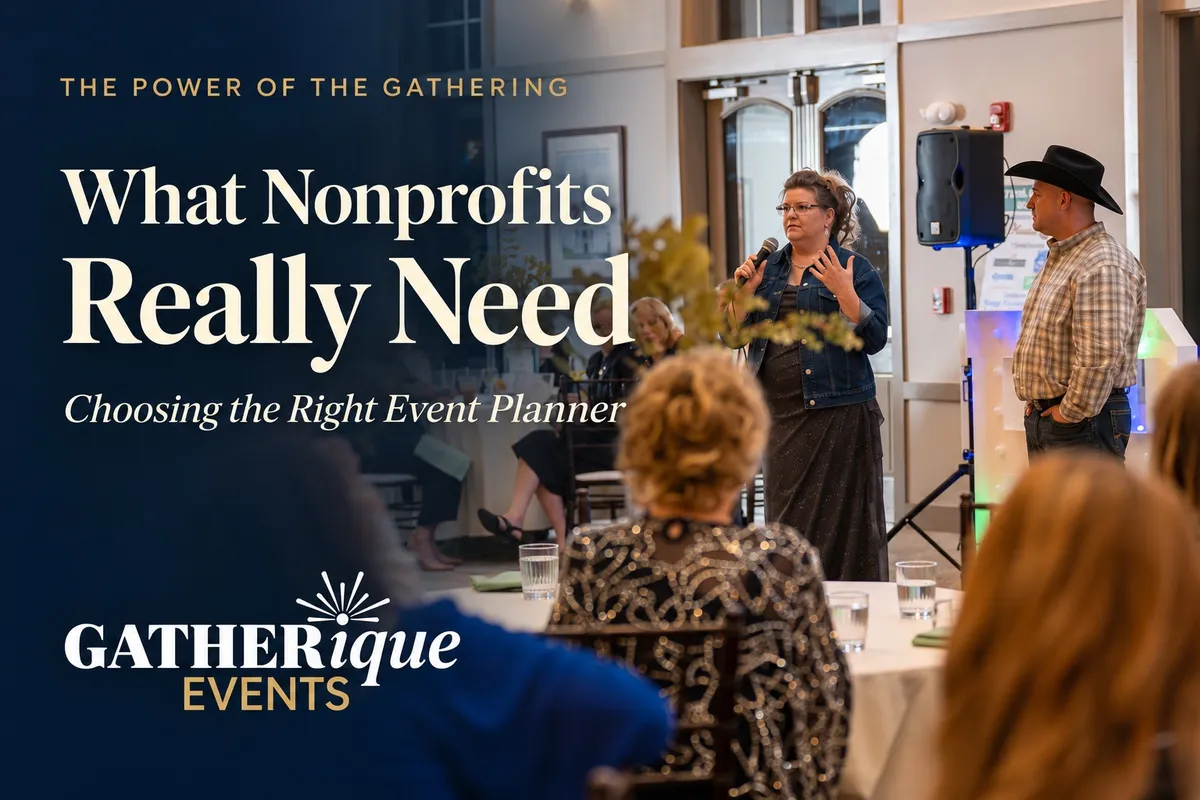
What Nonprofits Are Really Looking for When Hiring an Event Planner
THE QUICK ANSWER
What should a nonprofit look for in an event planner?
Nonprofits need an event planner who understands the mission, manages the budget transparently, coordinates people and vendors, and creates a welcoming donor experience. Look for clear responsibilities, realistic fundraising assumptions, thoughtful sponsor recognition, and a practical follow-up plan. The right partner gives your team the structure and capacity to focus on relationships.
Nonprofit events are powerful. They bring people together, raise awareness, strengthen donor relationships, and generate support for work that matters. Behind a successful gala, fundraiser, luncheon, or community gathering is a team making hundreds of connected decisions.
For many organizations, the challenge is not passion. It is time, capacity, structure, and execution. Staff members already manage programs, fundraising, volunteers, and daily operations. Adding a major event can stretch a capable team beyond the hours available.
That is why hiring an event planner is about more than choosing linens or confirming a menu. Nonprofits are looking for a partner who can connect the purpose of the event to the guest experience and help the organization carry out the plan. Here is what that partnership should provide.
1. Clear strategy before the details
Begin with one question: what does this event need to accomplish? Raising funds, welcoming new supporters, thanking donors, engaging the board, and building community awareness are different objectives. An event can support several, but the team needs to know which one leads.
A useful planning conversation makes those priorities specific. If donor retention matters most, the program should create opportunities to show impact and listen to existing supporters. If the goal is to introduce the mission to new people, the welcome, storytelling, and next steps need to make sense to someone attending for the first time.
Ask how the planner turns purpose into decisions
Look for a process that connects the audience, format, venue, program, budget, and follow-up. A strong proposal explains why a particular approach fits your organization. It should also identify assumptions that still need to be tested, such as expected attendance or the availability of sponsors.
At Gatherique Events, nonprofit event planning starts with the purpose behind the gathering. The design and logistics should make that purpose easier for people to understand and support. A beautiful room matters most when the experience inside it serves the mission.
2. Budget-conscious planning with clear tradeoffs
Every nonprofit has to make choices about resources. The right planner helps the team understand the full cost of the event, including expenses that can be easy to overlook. Production labor, equipment, delivery, staffing, printing, and payment processing can affect the final result as much as the headline venue price.
Ask for a working budget that separates confirmed costs from estimates. Revenue should also distinguish confirmed support from hoped-for ticket sales, sponsorships, and gifts. A conservative scenario can show what happens if attendance or fundraising falls below the initial expectation.
Compare net results and the experience you can deliver
A larger gross fundraising total does not automatically mean a stronger financial outcome. Review what remains after expenses and how much staff capacity the event requires. At the same time, consider the relationship value of the gathering without pretending every conversation can be assigned an immediate dollar amount.
A planner should explain where an investment improves the guest experience and where a simpler choice will work. Reliable sound may matter more than elaborate décor. A manageable guest count may allow more meaningful conversations than a bigger room your team cannot comfortably host. Our event budget planning guidance offers a foundation for those discussions.
3. Sponsorship support that matches real capacity
Sponsors want to understand the mission, the audience, and the experience their support makes possible. A sponsorship package should describe benefits clearly enough that both the nonprofit and the sponsor know what has been promised. Vague visibility is harder to deliver and harder to evaluate.
Useful benefits might include appropriate signage, program recognition, a hosted table, or acknowledgment in event communications. Choose benefits your organization can fulfill well. Too many speaking slots can overwhelm the program, and too many logo placements can make the mission harder to see.
Clarify who owns outreach and fulfillment
Ask whether the planner will develop the package, coordinate sponsor materials, track deliverables, or support outreach. These are separate responsibilities. The nonprofit may still need to lead relationship conversations and approve commitments. Put those boundaries in the scope so no one assumes another person is handling a critical task.
Keep a simple fulfillment record with the sponsor, commitment, benefit, materials needed, deadline, and owner. After the event, use it to prepare accurate appreciation and reporting. Thoughtful recognition builds trust because the organization follows through on what it said it would do.
4. A guest experience that feels welcoming and organized
Guests may never see the planning documents, but they feel the results. They notice whether arrival instructions are clear, check-in is calm, their questions receive helpful answers, and the program begins with a sense of purpose. Those details influence how comfortable people feel engaging with the organization.
Walk through the experience from the invitation to the final goodbye. Consider first-time donors, longtime supporters, volunteers, speakers, and guests who need assistance. Each may encounter different questions. A useful plan identifies where someone might feel confused and provides an easy next step.
Protect time for relationships
Assign operational responsibilities so development staff and organizational leaders can spend time with guests. A board member should know whether the role is hosting a table, making introductions, welcoming a sponsor, or helping with a specific program moment. Clear assignments are more useful than a general request to help wherever needed.
For a gala, registration, seating, meal service, and the fundraising program must work together. Our approach to fundraising gala planning connects those moving parts so the evening has room for both conversation and a focused mission message.
5. Mission moments that respect the people involved
The most meaningful nonprofit programs help guests understand why the work matters. A welcome, impact story, short video, or giving invitation can make the mission tangible. The strongest choice is the one that fits the organization and the people who have agreed to participate.
Plan storytelling with care. Make sure speakers understand the audience, format, and intended use of their story. Give them time to prepare and a point of contact for questions. Someone sharing a personal experience should feel supported, with clear choices about what they want to say.
Make the invitation to act understandable
Explain what support makes possible using information the nonprofit has verified. Avoid exaggerated promises or impact claims that the organization cannot substantiate. If the program includes a giving moment, make the process easy to follow and provide assistance without putting guests under uncomfortable pressure.
The invitation does not have to end with a donation. Depending on the event’s purpose, guests may be invited to volunteer, attend a briefing, introduce a potential partner, or continue a conversation. Choose a clear next step and make sure the team can respond when people take it.
6. A working partnership with defined responsibilities
A thoughtful planner brings calm through preparation and communication. Ask who will be your main contact, how decisions will be documented, and how frequently the team will review progress. The process should fit your organization’s capacity rather than adding meetings that create more work than they resolve.
The proposal should explain what is included, what remains with the nonprofit, and how additional requests are handled. Discuss vendor coordination, volunteer briefings, speaker preparation, registration support, and on-site leadership separately. “Full service” means little until the actual responsibilities are written down.
Understand approvals and contingency plans
Agree on who can approve spending, changes to the program, and sponsor commitments. Identify decisions that require executive or board review. Build those approval windows into the schedule so urgent requests do not become the normal way of working.
Ask how the team will respond to a late speaker, weather disruption, equipment problem, or unexpected guest need. The goal is a practical response plan with named owners. You are looking for someone who can prepare, communicate clearly, and make sensible adjustments when the event requires them.
PUT IT INTO PRACTICE
Imagine a small nonprofit hosting a donor luncheon. The executive director welcomes guests, development staff focus on relationships, volunteers have clear arrival assignments, and the planner coordinates vendors and timing. A short impact story and a clear follow-up invitation support the mission without filling every minute of the program.
7. Follow-up that continues the connection
Nonprofit events should lead somewhere. Before the gathering, decide how donors, sponsors, volunteers, and interested guests will be thanked and how the organization will respond to promised next steps. Capture useful notes respectfully and keep information accessible only to the people who need it.
Afterward, review the financial result, attendance, sponsor commitments, guest feedback, and the quality of the planning process. Separate what happened from what the team assumes happened. A full room may still leave gaps in donor follow-up; a smaller gathering may create valuable conversations that deserve careful attention.
Recognition should reflect the contribution people made. For ongoing supporters, donor appreciation events can offer another setting to listen, share progress, and strengthen relationships. Consistent stewardship connects one event to the organization’s wider fundraising work.
YOUR HIRING CHECKLIST
Before choosing a nonprofit event planner
Agree on the primary purpose and audience for the event.
Request a clear scope, responsibilities, and approval process.
Review realistic cost and revenue assumptions.
Clarify sponsor outreach and fulfillment responsibilities.
Discuss guest access, volunteer coordination, and mission storytelling.
Ask who will lead on site and manage unexpected changes.
Include appreciation, reporting, and follow-up in the plan.
Frequently asked questions
When should a nonprofit bring in an event planner?
Bring in a planner when the organization is defining the event, ideally before major venue and vendor commitments. Early involvement allows the purpose, budget, and guest experience to shape those choices. If planning is already underway, clearly identify the decisions made and the support still needed.
Will an event planner secure all our sponsors?
That depends on the agreed scope. Package development, sponsor outreach, relationship management, and benefit fulfillment are different tasks. Ask which are included and which remain with your team. No planning proposal should be treated as a guarantee of sponsorship revenue.
How do we compare proposals from different planners?
Compare responsibilities, staffing, planning process, deliverables, and exclusions alongside price. Ask each planner how the approach supports your mission and available resources. A lower fee may cover fewer tasks, while a more detailed scope may reduce the workload your team must absorb.
Give your mission the planning support it deserves
Your nonprofit event should create connection, build trust, and support the work your organization is here to do. Gatherique Events brings strategy, coordination, and thoughtful hospitality to nonprofit fundraising events across New England. Let’s talk about the purpose of your next gathering and the support that would make the greatest difference.