
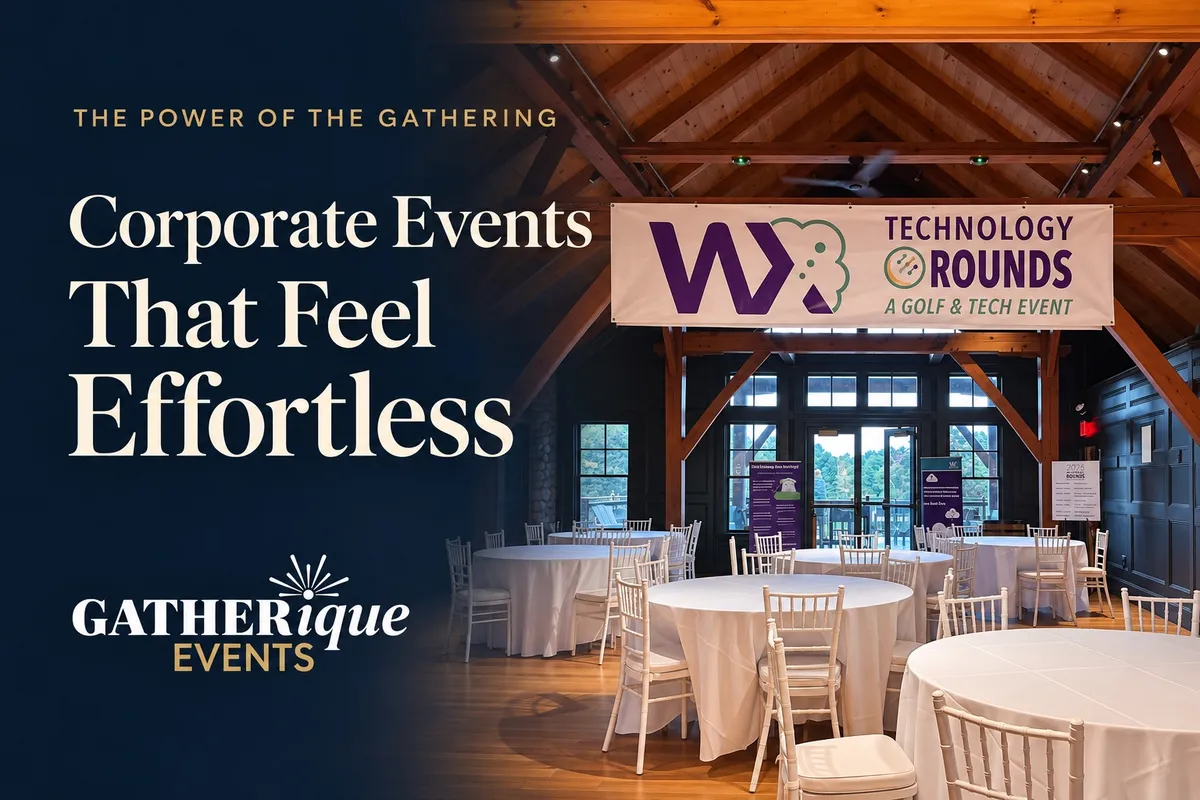
Part 2: How to Plan a Corporate Event That Actually Feels Effortless
THE QUICK ANSWER
How do you make corporate event planning feel manageable?
Start with a clear purpose, define who makes decisions, and build one coordinated plan for the budget, suppliers, program, and guest experience. Assign owners and deadlines, prepare realistic contingencies, and separate hosting responsibilities from operational duties. An effortless experience is usually the result of clear decisions and careful preparation behind the scenes.
A company offsite can begin as a simple idea in a leadership meeting. Then come the venue questions, calendar decisions, catering quotes, speaker requests, and registration details. Before long, someone is coordinating a major event alongside a full-time role.
I’m Carol Connors, founder of Gatherique Events. I built this company to help organizations turn those moving parts into a purposeful experience. Event planning can feel more manageable when people know what matters, what happens next, and who is responsible.
Effortless does not mean nothing unexpected happens. It means the team has enough structure to handle changes without making every question an emergency. Here is how to create that foundation.
Start with a brief everyone can use
Before comparing venues or filling an agenda, describe the reason for the event. Are you bringing a remote team together, aligning leaders around priorities, introducing a product, or recognizing a company milestone? Choose the main outcome and identify the people who need to be involved.
Put the essential information into a short brief: purpose, audience, approximate attendance, timing, budget range, and measures of success. Include constraints such as travel requirements, access needs, or a decision that must be made before the event can proceed.
Use the brief to resolve competing ideas
When someone suggests an additional session, activity, or guest group, compare the idea with the brief. Will it support the purpose? What does it require in time, money, or staffing? What would need to change to accommodate it? This creates a useful conversation instead of a growing list of unconnected requests.
Make the brief available to the core team and relevant suppliers. It should give people enough context to make recommendations that fit. Our event strategy consulting helps turn broad intentions into priorities that can guide practical decisions.
Set up decision-making before the pace increases
Many planning delays come from unclear ownership. One person believes the venue is approved, another is waiting for budget confirmation, and a supplier needs an answer that no one is authorized to give. Establish the decision process while the project is still calm.
Identify the executive sponsor, day-to-day contact, budget approver, and operational lead. Some roles may be held by the same person, but the responsibilities should still be explicit. Clarify which decisions require review and which the planning team can make within agreed boundaries.
Keep one reliable record of the plan
Use a shared project plan that shows tasks, owners, due dates, and status. Keep decisions and current documents in a place the team can find. A supplier should not have to choose between three different agendas attached to three different email threads.
Make meetings purposeful. Review the decisions needed, the next milestones, and the issues that could affect timing or cost. Send clear notes afterward, including who will act and by when. A short, consistent review can be more effective than frequent meetings with no defined outcome.
Build the budget around the full experience
A workable budget includes more than a venue and meal estimate. Depending on the format, consider equipment, production labor, transport, staffing, registration tools, speaker support, materials, and follow-up. Make allowances for the costs that depend on final attendance or program choices.
Separate confirmed commitments from estimates. Keep a record of assumptions so the team knows why a number is in the budget. If a quote excludes delivery or setup, identify that gap before presenting the total as complete.
Make tradeoffs visible
When a new request arrives, show its effect on the wider plan. A second breakout room may involve additional equipment, signage, staffing, and transition time. A longer reception may affect venue access and supplier hours. Looking at the connected costs makes approval more meaningful.
Protect the elements that make the event work: reliable sound, clear information, comfortable participation, and capable coordination. Optional décor or entertainment should earn its place through the value it adds. Our event budget planning guidance can help your team approach those decisions with more clarity.
Choose a format that fits the work
The right format follows the purpose and audience. A small leadership discussion, an all-company celebration, and a client conference need different settings and rhythms. Begin with what people must be able to do together, then consider the space and production required.
For a retreat, participants may need privacy, time for reflection, and comfortable discussion areas. For a larger conference, clear circulation, strong sound, and coordinated session transitions may be more important. A hybrid format adds a separate set of participation and support needs.
Compare venues against the same requirements
Ask each venue about the spaces, staffing, equipment, access, food service, and schedule you need. Review what is included and what would require another supplier. A visually impressive location can still create unnecessary work if it does not support the program.
Walk through arrival, registration, sessions, meals, and departure. Consider where people will queue and how they will find their way. Our leadership retreat planning process connects venue selection to the team’s working needs, while conference planning requires its own operational priorities.
Design the agenda around human attention
A full schedule is not the same as a useful schedule. People need time to absorb information, contribute, move between spaces, and talk with one another. An agenda that ignores those needs can feel rushed even when each individual session is worthwhile.
Alternate formats deliberately. A presentation might lead into a small-group discussion, followed by a break and then a decision session. The sequence should help the audience understand why each part exists and what they are expected to do.
Give transitions real time
Include the practical minutes between program elements. Guests may need to leave a room, find a restroom, collect refreshments, and reach another location. Speakers need handovers, equipment checks, and a clear cue to begin. Those transitions belong in the plan.
Protect the most important conversation from the end-of-day rush. If the event must produce a decision, leave enough time to discuss it, record it, and assign follow-up. Avoid placing the central outcome in a final five-minute slot after a packed program.
For a closer look at relevance and participation, read what attendees actually want from a corporate event. The guest’s experience is a useful test of every agenda choice.
Make supplier coordination specific
Each supplier needs a clear scope and an understanding of how their work connects to the rest of the event. Confirm arrival times, access arrangements, setup requirements, service windows, and the person who can answer questions on site.
Keep a current supplier contact list and a coordinated production schedule. A catering team needs to know when a session ends. A production team needs the final speaker order. A venue needs to understand deliveries and room changes. Shared timing prevents separate plans from colliding.
Confirm the details that cause avoidable surprises
Check final quantities, equipment specifications, room layouts, and the deadlines for changes. Review what happens if attendance shifts or a supplier needs an adjustment. Keep written confirmation of the agreed details so the event team can resolve questions consistently.
Run through the guest-facing elements before opening. Test microphones, presentation files, registration flow, and directional signs. A rehearsal should include handovers and transitions, because those are often where small misunderstandings become visible.
Let hosts host and operators operate
The person welcoming clients should not also be the only person managing a late delivery. The leader introducing a speaker should not need to troubleshoot a microphone at the same moment. Separate the responsibilities that require attention in the room from those that require operational oversight.
Brief staff, volunteers, and hosts on their specific roles. Explain where to direct questions, who can authorize changes, and how urgent issues will be communicated. Give people the information they need without overwhelming every team member with every detail.
Prepare practical responses to likely changes
Identify a few realistic scenarios: a speaker is delayed, a session runs long, weather changes an outdoor plan, or a guest needs assistance. Assign a response owner and agree on the first steps. The plan should help people act with confidence rather than require them to interpret a long document under pressure.
Keep the guest informed when changes affect their experience. A concise announcement and a helpful host can prevent confusion. Behind the scenes, record important changes so the team can understand what happened and improve future planning.
PUT IT INTO PRACTICE
Imagine a company offsite where the keynote arrives late. The operational lead confirms the revised arrival, the facilitator moves a prepared discussion earlier, and hosts explain the new sequence. Because the team has agreed roles and a flexible agenda, the change can be handled without asking the executive sponsor to coordinate every detail.
Close the event with useful follow-through
Plan the ending before the event begins. Confirm who sends resources, thanks speakers and suppliers, collects feedback, and follows up on decisions. A well-run gathering should not leave the host facing an undefined second project afterward.
Review outcomes and the planning process together. Did the event achieve its main purpose? Where did guests need more support? Which approvals took longer than expected? What should be repeated or simplified? Capture the lessons while the team can still remember the details.
YOUR PLANNING CHECKLIST
Build the structure that makes the experience feel easy
Agree on the purpose, audience, budget, and main outcome.
Assign decision-makers and operational responsibilities.
Maintain one current project plan and decision record.
Choose a venue and format that fit the agenda.
Include realistic transitions, breaks, and preparation time.
Coordinate suppliers through a shared production schedule.
Brief the team, rehearse key moments, and prepare contingencies.
Assign follow-up before the event day arrives.
Frequently asked questions
Can an event planner help if we have already booked the venue?
Yes, depending on the support needed and the time available. Share existing commitments, the budget, and the decisions still open. A planner can help identify gaps and coordinate the remaining work within a clearly defined scope.
How much involvement will our internal team still need?
Your team usually retains decisions about purpose, budget, stakeholders, and organizational content. The planner’s responsibilities depend on the engagement. Agree on approvals, contacts, and deliverables so the partnership reduces uncertainty rather than creating it.
What makes an event feel effortless to guests?
Clear communication, helpful hosts, a realistic agenda, reliable production, and smooth transitions all contribute. Guests should be able to focus on the people and purpose of the gathering because the practical details are easy to understand.
Bring clarity to your next corporate gathering
Gatherique Events combines thoughtful design with the coordination that makes it work. Our corporate event planning services help turn a promising idea into a clear, manageable plan. Let’s discuss your event, your team’s capacity, and the support that will make the experience stronger.